 ultimate-guide
Roofing Installation Standards for Florida: 2026 Guide
Table of Contents
- Why Florida Roofing Installation Standards Are Different
- Florida Building Code and HVHZ Requirements Explained
- Roof Deck Attachment Standards Florida Contractors Must Follow
- The 25 Percent Rule for Roofing in Florida
- The Roofing Permit Process in Volusia County
- Material-Specific Compliance: Shingle, Tile, and Metal Roofs
- Insurance Premium Mitigation and Code Compliance
- How to Verify a Contractor Meets Florida Roofing Installation Standards
- Frequently Asked Questions
Last Updated: September 21, 2026
Why Florida Roofing Installation Standards Are Different
Roofing installation standards for Florida are a legal baseline written into the Florida Building Code, because the state's wind, rain, and heat punish shortcuts faster than almost anywhere else. At Roofing Done Right, we work inside these rules daily across Volusia County, and the gap between a code-compliant roof and a "looks fine from the street" roof shows up years later, usually during an insurance inspection or the first named storm.
Florida Building Code and HVHZ Requirements Explained
The Florida Building Code (FBC) is the enforceable rulebook for every roof installed in the state, and the High Velocity Hurricane Zone (HVHZ) is its strictest tier. The HVHZ covers Broward and Miami-Dade counties, where wind and impact requirements are the most demanding in the state. Volusia County sits outside the HVHZ, but the FBC still governs wind load, attachment, and product approval for your roof.
Wind Load, Uplift, and Design Pressure Basics
Wind uplift is the upward force that pulls a roof assembly off a structure, and it is the biggest reason Florida attachment rules are stricter than most states. Design pressure is the calculated force your roof must resist, based on location, building height, and exposure.
Miami-Dade NOA and Florida Product Approval
Miami-Dade Notice of Acceptance (NOA) certifies that a product passed the most rigorous wind and impact testing in the state. Florida Product Approval (FPA) is the statewide system that lets a product be used across Florida without separate local testing.
Roof Deck Attachment Standards Florida Contractors Must Follow
Roof deck attachment is how the plywood or OSB sheathing connects to the roof trusses, and it is where most wind failures begin. In Florida, the code specifies the fastener schedule based on wind zone, roof slope, and sheathing thickness.
The core requirements:
- Fastener type and spacing must match the approved schedule for your wind zone.
- Deck attachment must be verified before any underlayment goes down.
- Corrosion resistance matters on every nail, screw, and clip. Coastal air eats cheap fasteners.
- Load path continuity from deck to truss to wall is checked during inspection.
The 25 Percent Rule for Roofing in Florida
The 25 percent rule is the most misunderstood re-roofing rule in Florida, and the one most likely to turn a small repair into a full replacement. If work on a roof exceeds 25 percent of the total roof area in any 12-month period, the entire roof system must be brought up to the current Florida Building Code, not just the repaired portion.
What Counts Toward the 25 Percent
The percentage is measured against the total roof area, not the number of shingles or linear feet of ridge. Practical points:
- Roof area means the full square footage of the roof surface, including all slopes, hips, and valleys, not the footprint of the house.
- Repairs count cumulatively. Two separate repairs of 15 percent each within 12 months can trigger the rule even if neither one alone crossed the threshold.
- Recover vs. replacement matters. Adding a new layer over an existing roof (a "recover") is treated differently than a tear-off, and many jurisdictions limit recover to one layer or prohibit it entirely in certain wind zones.
- Storm damage is the most common trigger. A few missing shingles look minor until an inspector measures the affected area and adds it to a prior repair from the same year.
How the Rule Plays Out in Practice
| Situation | What the Rule Requires |
|---|---|
| Repair under 25% of total roof area | Repair to code; full replacement not triggered |
| Repair over 25% of total roof area | Entire roof must meet current code |
| Multiple repairs totaling over 25% in 12 months | Full replacement triggered |
| Full replacement | Entire roof assembly must be code-compliant |
| Recover over existing roof | Subject to local limits; often counts toward the threshold |
Why This Matters for Retrofitting vs. New Construction
A new-construction roof is built to current code from the first nail. A retrofit, a repair or partial replacement on an older home, is where the 25 percent rule bites. An older roof may have been compliant when installed, but code has moved on: fastener schedules have tightened, secondary water barriers are required in more cases, and product approvals have changed.
How the Rule Interacts With Permits
The 25 percent rule and the permit process are linked. A repair that crosses the threshold typically requires a permit for a full re-roof, not a repair permit, meaning inspections at deck attachment, underlayment, and final stages, the same sequence as a new roof. Skipping the permit can void insurance coverage and create a disclosure problem at resale.
The Roofing Permit Process in Volusia County
The roofing permit process in Volusia County is where code compliance becomes paperwork, and skipping it is one of the fastest ways to create a problem. A permit triggers inspection, and inspection proves the roof was installed to standard.
The general sequence:
- Submit the permit application with product approval numbers and a scope of work.
- Receive the permit and post it on site before work begins.
- Schedule inspections at deck attachment, underlayment, and final stages.
- Pass final inspection and receive a certificate of completion.
Material-Specific Compliance: Shingle, Tile, and Metal Roofs
Asphalt shingle roofs: require a specific underlayment grade for the wind zone, a secondary water barrier in many cases, and a fastener pattern matching the manufacturer's approved installation. Drip edge and flashing details are inspected.
Insurance Premium Mitigation and Code Compliance
Code-compliant roofing can reduce insurance premiums. Insurers price risk, and a roof meeting current Florida standards presents measurably less risk than one that does not. The mechanism connecting the two is the Wind Mitigation Inspection, a standardized assessment that documents a home's wind-resistant features and feeds directly into the premium calculation.
How the Wind Mitigation Inspection Works
A licensed inspector, often a home inspector, engineer, or contractor with the proper credential, evaluates the home against a standardized form used by Florida insurers. It is not a general home inspection but a feature-by-feature verification of wind resistance, producing a report the insurer uses to apply credits.
The features that typically drive credits:
- Roof covering, whether it carries a current Florida Product Approval or Miami-Dade Notice of Acceptance, and whether it is rated for impact resistance.
- Roof deck attachment, the fastener type, spacing, and whether the deck is attached to code. This is often the single largest credit driver.
- Roof-to-wall connection, how the roof structure is tied to the walls, including strap type and embedment.
- Secondary water barrier, a peel-and-stick or self-adhering membrane under the roof covering that limits water intrusion if the covering is breached.
- Roof geometry, hip roofs generally receive more favorable treatment than gable roofs because of how they shed wind.
- Opening protection, impact-rated windows, doors, and garage doors, which affect the overall wind resistance profile.
Why Documentation Is the Whole Game
A code-compliant roof with no paperwork is hard to prove at claim time and at renewal time. The insurer does not take the contractor's word or the homeowner's memory, it wants the form, the permit, the inspection certificate, and the product approval numbers.
Keep these together in one file:
- The roofing permit and final inspection certificate
- The Florida Product Approval or Miami-Dade NOA number for the covering
- The manufacturer's installation instructions used on the job
- The Wind Mitigation Inspection report and its date
- Photos of the deck attachment before underlayment was installed
What the Credits Actually Do
Wind mitigation credits do not eliminate premiums. They reduce the wind portion of the premium, which in coastal and near-coastal areas is often the largest single component. The credit size depends on the insurer, the home's features, and how many credits apply. A home with a new code-compliant roof, upgraded deck attachment, and documented secondary water barrier will typically fare better than an identical home without them.
A Practical Sequence for Homeowners
- Before the roof is installed, confirm the covering has a current Florida Product Approval or NOA number.
- Ask the contractor to photograph deck attachment before underlayment goes down.
- After final inspection, request the permit closeout and inspection certificate.
- Schedule a Wind Mitigation Inspection once the roof is complete, the new features are what the inspector needs to see.
- Submit the report to the insurer and ask specifically which credits were applied.
Most practitioners find that homeowners who complete this sequence recover a meaningful portion of the inspection cost through the first renewal. The Florida Office of Insurance Regulation publishes guidance on how mitigation features affect coverage and what homeowners can request from their insurer.
How to Verify a Contractor Meets Florida Roofing Installation Standards
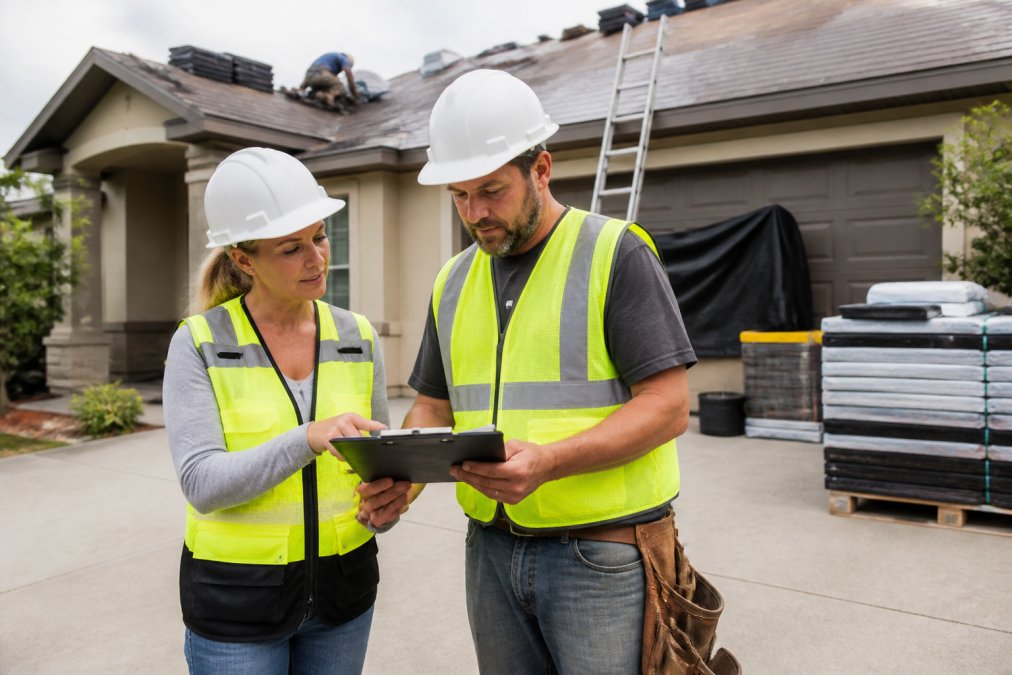
Verifying a contractor comes down to three checks: license, insurance, and documentation. Ask for all three before signing, and do not accept verbal assurances.
The verification checklist:
- Confirm the contractor's Florida license number through the state licensing database.
- Request a certificate of insurance for general liability and workers' compensation.
- Ask for the Florida Product Approval or Miami-Dade NOA number for the roof covering.
- Confirm the contractor will pull the permit in their name, not yours.
- Get the fastener schedule and underlayment spec in the written proposal.
- Ask how cleanup is handled and whether nail removal is included.
Frequently Asked Questions
What is the 25 percent rule for roof replacements in Florida?
The 25 percent rule requires that if you repair or replace 25 percent or more of a roof's total area within any 12-month period, the entire roof must be brought up to current Florida Building Code. This applies to both residential and commercial roofs. A licensed contractor can measure your roof and determine whether your repair crosses that threshold before work begins.
Do I need a permit for a roof repair or replacement in Volusia County?
Yes. Volusia County requires a permit for roof replacements and most structural repairs. Minor repairs like replacing a few shingles may not need one, but your contractor should confirm with the county building department. The roofing permit process involves submitting product approval documents, a scope of work, and passing inspections at specific stages. Always ask your contractor for the permit number before work starts.
What are the roof deck attachment standards in Florida?
Florida roof deck attachment standards require specific nail patterns, nail sizes, and spacing based on wind zone and roof slope. In the High Velocity Hurricane Zone, fasteners must meet stricter schedules and often require ring-shank nails or screws. The deck must be re-nailed to current code during a replacement. Your contractor's permit documents will show the required fastener schedule for your specific property.
How do Florida Building Code requirements affect my insurance premium?
A roof built to current Florida Building Code standards, including proper deck attachment, secondary water barrier, and approved roof covering, can qualify you for wind mitigation discounts on your homeowners insurance. Many carriers offer credits for features like hurricane straps, impact-rated coverings, and documented code-compliant installation. Ask your contractor for the wind mitigation inspection paperwork after the job is complete.
What is the difference between HVHZ and non-HVHZ roofing standards?
The High Velocity Hurricane Zone covers Broward and Miami-Dade counties and requires the strictest wind resistance standards in the state, including Miami-Dade NOA approval for all roof components. Non-HVHZ areas like Volusia County follow the Florida Building Code but with less stringent wind speed requirements. Your contractor should know which wind zone your property falls in and pull the correct product approvals for that zone.
How can I check if a roofing contractor is licensed and insured in Florida?
Verify a contractor's license through the Florida Department of Business and Professional Regulation (DBPR) website. Search by name or license number. Ask for a certificate of insurance showing general liability and workers' compensation coverage, and call the insurance company to confirm it is active. A legitimate contractor will provide these documents without hesitation and can show you their state license number in writing.
What happens if my roof is installed without meeting Florida roofing installation standards?
A non-compliant roof can fail a county inspection, which means you may be required to tear off and redo the work at your own expense. It can also void your manufacturer warranty and give your insurance company grounds to deny a storm damage claim. In some cases, unpermitted work must be disclosed at the time of sale, which can delay or kill a real estate transaction.