 blog
7 Best Roofing Materials for Florida Homes
Quick Summary
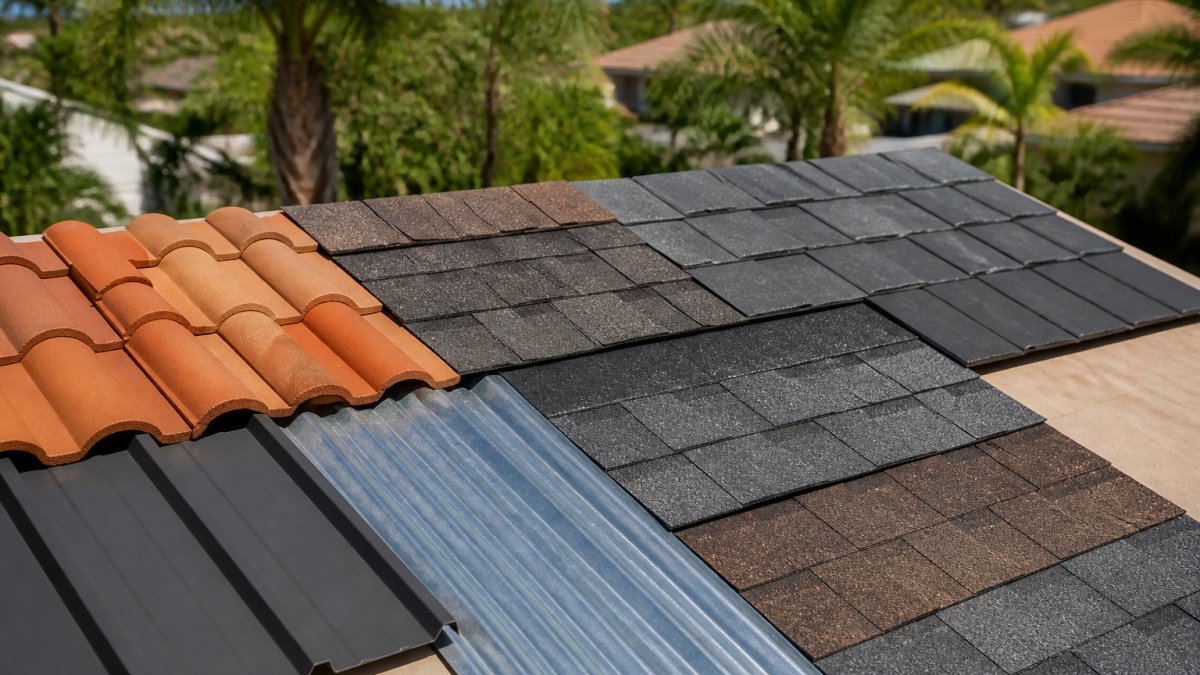
The best roofing materials for Florida homes balance storm resistance, lifespan, and long-term cost rather than excelling at just one. Architectural shingles offer the best value for most Florida homes, while metal and concrete or clay tile deliver longer service life in heat, humidity, and salt air.
- Architectural shingles were named the best value for most Florida homes in a 2026 Florida material comparison.
- Metal roofing has a projected lifespan of 40 to 70 years, compared with 12 to 20 years for some common materials.
- Concrete and clay tile can last 50 to 100+ years but require structural support and roof pitch checks first.
- Metal roofing systems can withstand hurricane winds in the 140 to 180 mph range when properly installed.
- Products installed in Florida must meet wind and product-approval standards beyond national baseline codes.
Table of Contents
- What Florida Homes Demand From Roofing Materials
- Asphalt Shingles vs. Metal Roof: A Side-by-Side Look
- Best Shingles for High Winds and Storm Season
- Concrete and Clay Tile: Longevity in a Hot, Humid Climate
- Roofing Material Lifespan: What to Expect From Each Option
- Energy Efficiency, Heat Reflection, and Cool Roof Options
- Florida Building Code, Insurance, and Whole-Roof Performance
- Get a Free Roof Evaluation Before You Choose
- Frequently Asked Questions
What Florida Homes Demand From Roofing Materials
Florida roofs face conditions that most of the country never sees: hurricane-force gusts, relentless sun, salt-laden air near the coast, and humidity that never lets up. According to the Florida Building Code, roofing products installed here must meet wind and product-approval standards that go well beyond national baseline codes. At Roofing Done Right, we evaluate roofing materials for Volusia County homes against exactly those conditions every week, and the honest answer is that no single material wins on every measure.
Roofing materials are the exterior coverings that protect a structure from rain, wind, and sun, and in Florida the choice comes down to how a product handles wind uplift, heat, moisture, and salt. The best roofing materials for Florida balance storm resistance, lifespan, and long-term cost rather than excelling at just one.
Below, we break down seven options, from budget-friendly architectural shingles to standing-seam metal, and explain where each one actually makes sense.
Asphalt Shingles vs. Metal Roof: A Side-by-Side Look
Asphalt shingles cost the least upfront and remain the most common roof covering on homes here, while metal roofing costs more but lasts far longer and handles wind and heat better. The trade-off is simple on the surface: shingles win on budget, metal wins on durability. The real decision, though, comes down to how each product behaves as part of a whole roof system under wind uplift, heat cycling, and moisture.
Architectural shingles and three-tab shingles dominate residential roofs because they are affordable and fast to install. Standing-seam metal panels are the premium alternative, with a projected lifespan of 40 to 70 years compared with 12 to 20 years for some common materials, per ASP SuperHome's 2026 material review.
| Feature | Asphalt Shingles | Metal Roof |
|---|---|---|
| Upfront cost | Lowest | Higher |
| Lifespan | Shorter | 40-70 years |
| Wind performance | Good with proper fastening | Excellent |
| Heat reflection | Limited | Strong with cool-roof finishes |
| Repair ease | Straightforward | Specialist work |
| Weight | Light to moderate | Light |
| Corrosion risk near coast | Low | Depends on coating and fasteners |
| Solar-ready | Possible with mounting hardware | Often easier with clamp systems |
How each product actually resists wind. Shingle wind ratings depend on the full assembly: the shingle mat, the nailing pattern, the starter strip, the underlayment, and the edge metal. A shingle rated for high wind still fails early if the installer skips starter strip or uses too few fasteners. Metal panels resist uplift through concealed fasteners and interlocking seams, but the attachment to the deck and the gauge of the panel matter as much as the panel itself.
How each product handles heat and moisture. Dark asphalt shingles absorb heat and can push attic temperatures higher, while metal with reflective finishes and light-colored tile perform better on heat reflection. In humid, shaded areas, algae streaking is common on asphalt shingles; copper-infused or algae-resistant shingle lines help, and metal roofs generally resist biological growth better. Near the coast, salt exposure makes fastener and coating selection critical for metal; galvanized or zinc-aluminum coated steel with matching fasteners holds up better than bare steel.
What the code and insurers care about. Products installed here must meet wind and product-approval standards that go well beyond national baseline codes, per the Florida Building Code. That means the specific product and assembly, not just the material category, must be approved for the wind zone and exposure. Insurers also weigh roof age, material, and installation documentation when setting premiums, and a wind-mitigation inspection can affect eligibility and discounts.
Lifecycle economics. Shingles cost less per square upfront but typically need replacement sooner, and repairs are straightforward. Metal costs more initially but spreads that cost over a much longer service life, and repairs require specialist labor. When you compare the two, look at maintenance, repair access, expected replacement timing, and how each affects insurance and energy costs, not just the bid price.
If you're weighing whether to fix what you have or start over, our roof repair vs replacement guide walks through the decision before you commit to either material.
Best Shingles for High Winds and Storm Season
The best shingles for high winds are impact-rated architectural shingles installed with a reinforced nailing pattern and a manufacturer-approved underlayment. Product wind ratings only hold when the whole system, including fasteners and edge metal, is installed to spec.
Architectural shingles outperform three-tab products in wind uplift because of their heavier mat and interlocking design. In 2026, Coastline Roofs' Florida material comparison named architectural shingles the best value for most Florida homes. Watch out: a shingle rated for high wind still fails early if the installer skips starter strip or uses too few fasteners.
Before you shop for new shingles, check the current roof for existing damage. Our guide to 8 signs of storm damage on your roof shows what to look for after a storm passes.
Concrete and Clay Tile: Longevity in a Hot, Humid Climate
Concrete tile and clay tile offer the longest service life of any common Florida roofing material, with the potential to last 50 to 100+ years, according to Keown Builders' 2026 roofing overview. Tile shrugs off heat, resists rot, and holds color well in intense sun.
The catch is weight. Tile is heavy, so structural support and roof pitch must be checked before installation. It also cracks under impact and needs a skilled hand for repairs. For homes that can carry the load, tile is a genuine buy-once material.
Roofing Material Lifespan: What to Expect From Each Option
Roofing material lifespan varies widely depending on the material, climate, installation quality, and maintenance. Climate, installation quality, and maintenance move those numbers more than most homeowners expect. But lifespan alone is a weak way to compare materials. The better question is lifecycle cost: what you pay upfront, what you spend on maintenance and repairs, when you are likely to replace the roof, and how the material affects insurance and energy costs along the way.
Request a Free Roofing Estimate →
| Material | Expected Lifespan | Best For |
|---|---|---|
| Three-tab shingles | Shortest | Tight budgets |
| Architectural shingles | Moderate | Most homes |
| Metal | 40-70 years | Long-term value |
| Concrete/clay tile | 50-100+ years | Hot climates |
| Composite/rubber | Moderate to long | Class 4 needs |
Why lifespan claims vary so much. A manufacturer's lifespan estimate assumes a properly installed whole-roof system: correct underlayment, fasteners, flashing, edge metal, and decking. Skip any of those and the covering fails early regardless of the label. Heat cycling, humidity, salt air near the coast, and shade that encourages algae growth all shorten service life. Most practitioners find that installation quality and maintenance matter more than the material category when predicting how long a roof actually lasts.
Lifecycle cost, not just price per square. Shingles cost less upfront but typically need replacement sooner, and repairs are straightforward. Metal costs more initially but spreads that cost over a much longer service life, and repairs require specialist labor. Tile can last generations but is heavy, cracks under impact, and needs skilled repair. When you compare, add up the initial bid, expected maintenance, likely repair frequency, replacement timing, and any insurance or energy effects. A material with a higher upfront price can still be the lower-cost choice over the life of the roof.
Replacement timing and repairability. Ask how easy it will be to find matching replacement components years from now, and whether future penetrations for solar or vents can be flashed without compromising the roof. Metal and tile generally allow cleaner long-term repair access than aging shingle roofs, but specialist labor costs more. Composite and rubber products can meet Class 4 impact needs but vary in repairability.
Insurance and documentation. Insurers weigh roof age, material, and installation documentation when setting premiums, and a wind-mitigation inspection can affect eligibility and discounts. Keep your permits, product approvals, and installation records; they matter at claim time and at renewal.
Whatever you choose, the warranty matters as much as the lifespan claim. Our guide to roofing warranty types for Florida explains which ones actually protect the investment.
Energy Efficiency, Heat Reflection, and Cool Roof Options
Cool roof products reflect more sunlight and absorb less heat, which can lower attic temperatures in a hot climate. Metal with reflective finishes and light-colored tile perform best; standard dark shingles perform worst.
Heat reflection matters most on low-slope and flat roofing systems, where surface temperature climbs fastest. If cooling bills are a concern, ask about reflective coatings and cool-roof-rated products during the estimate.
Florida Building Code, Insurance, and Whole-Roof Performance
A roof is only as good as its whole system: underlayment, fasteners, flashing, and edge metal all determine whether the covering survives a hurricane. The Florida Building Code sets product-approval and wind requirements, and insurers weigh roof age and material when setting premiums.
Metal roofing systems can withstand hurricane winds in the 140 to 180 mph range when properly installed, per ASP SuperHome. For the installation standards that decide whether a roof meets code and performs as intended, read our Florida roofing installation standards guide.
Get a Free Roof Evaluation Before You Choose
Choosing a material starts with knowing what your roof can support and what condition it's in. A free roof evaluation from Roofing Done Right covers the roof's current state, structural capacity for heavier materials, and the storm exposure of your specific home, all before you spend a dollar.
We serve Volusia County exclusively, handle both residential and commercial roofs, and protect landscaping and driveways throughout every project. Our team also documents findings clearly for insurance adjusters.
Get started with Roofing Done Right and a free roof evaluation that points you to the right material for your home.
Frequently Asked Questions
Are metal roofs good for Florida homes?
Yes. Standing-seam metal, especially Galvalume steel, is one of the strongest performers for coastal Florida because it handles high-velocity hurricane winds well. Metal systems are generally considered durable and long-lasting. The tradeoff is upfront cost, so ask for a free evaluation to see whether the lifecycle savings fit your budget.
Which roofing material holds up best in high winds?
Metal roofing, particularly standing-seam panels, is the top performer for wind resistance in Florida. For shingle roofs, look for architectural shingles rated for high winds rather than standard three-tab products, and confirm the whole system, including underlayment and fasteners, meets current Florida Building Code requirements. Wind uplift depends on installation as much as material, so a licensed contractor's assessment matters. Roofing Done Right offers free roof inspections in Volusia County to check your current roof's wind readiness.
Are tile roofs better than shingle roofs in Florida?
It depends on your priorities. Concrete and clay tile are known for long service lives and handle heat and humidity well. But tile is heavier, may need structural support, and costs more upfront. Architectural shingles remain the best value for most Florida homes and are easier to repair. If longevity is your main goal, tile or metal may win; if budget and repairability matter most, shingles are the practical choice.
How does Florida's climate affect roofing material choice?
Florida's mix of hurricane winds, intense heat, high humidity, and salt exposure narrows the field. Materials must resist wind uplift, reflect heat to support energy efficiency, and stand up to moisture without rotting or corroding. Coastal homes also face salt corrosion and algae, which makes corrosion-resistant fasteners and algae-resistant shingles worth considering. Florida building code sets the compliance standard for roofing products.