 ultimate-guide
Roof Repair vs Replacement Guide: What to Choose
Table of Contents
- Roof Repair vs Replacement: How to Decide
- Signs You Need a New Roof (and Signs a Repair Will Do)
- Your Roof Inspection Checklist Before You Commit
- Roof Repair vs Replacement Cost: What Actually Drives the Number
- Roof Age, Material Lifespan, and Repairability
- The Roof Replacement Timeline, Start to Finish
- Insurance, Warranties, and Long-Term Value
- Conclusion: Match the Fix to the Damage
- Frequently Asked Questions
Last Updated: October 20, 2026
Roof Repair vs Replacement: How to Decide
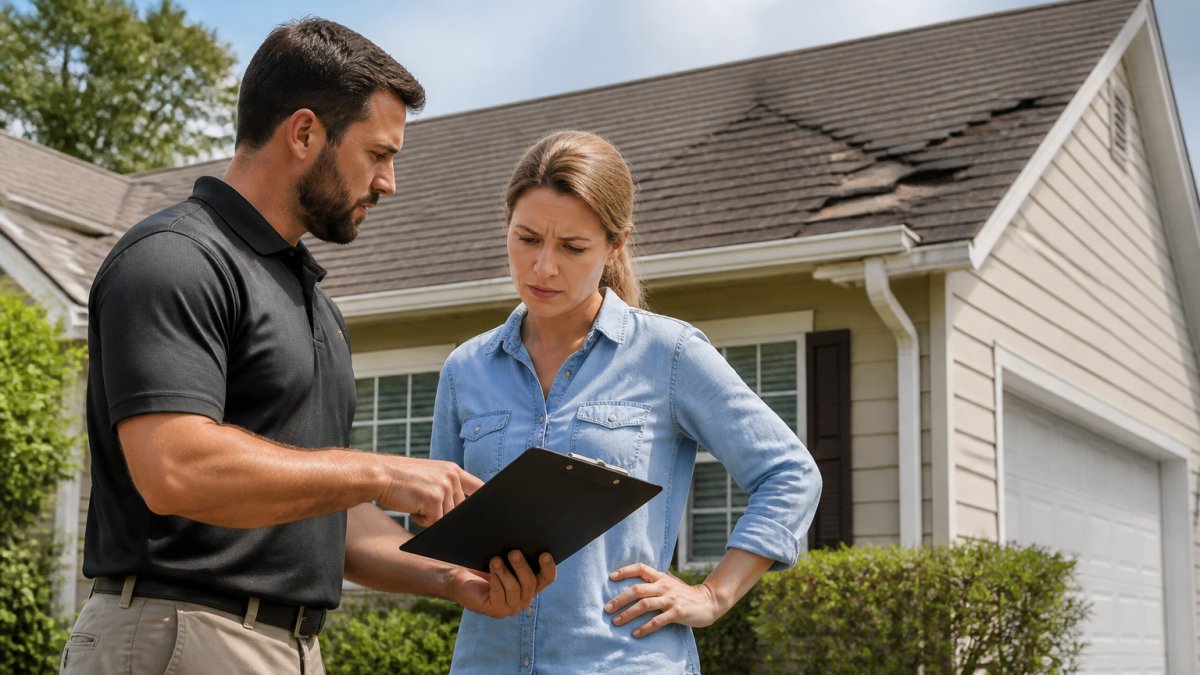
The decision between roof repair and replacement comes down to four factors: roof age, damage severity, the extent of the affected area, and how much life the existing roof realistically has left. This roof repair vs replacement guide from Roofing Done Right is built around one idea: you fix what's failing, and you replace what's finished.
Roof repair is the targeted restoration of a specific damaged area, such as a leak, a few missing shingles, or failed flashing. Roof replacement is the full removal and rebuild of the roof system, including underlayment and any compromised decking.
Here's what most guides get wrong: they treat age as the deciding vote. It isn't. A twelve-year-old roof with one failed pipe boot is a repair.
The Four Factors That Drive the Decision
We evaluate every roof on the same four questions, and the answers rarely point in different directions.
- Roof age: Where is the roof in its expected lifespan?
- Damage severity: Is this surface wear or structural damage?
- Extent: One slope, or several?
When three of the four point toward replacement, a repair is usually money spent on borrowed time. When three point toward repair, a full tear-off is an upsell you don't need.
Signs You Need a New Roof (and Signs a Repair Will Do)
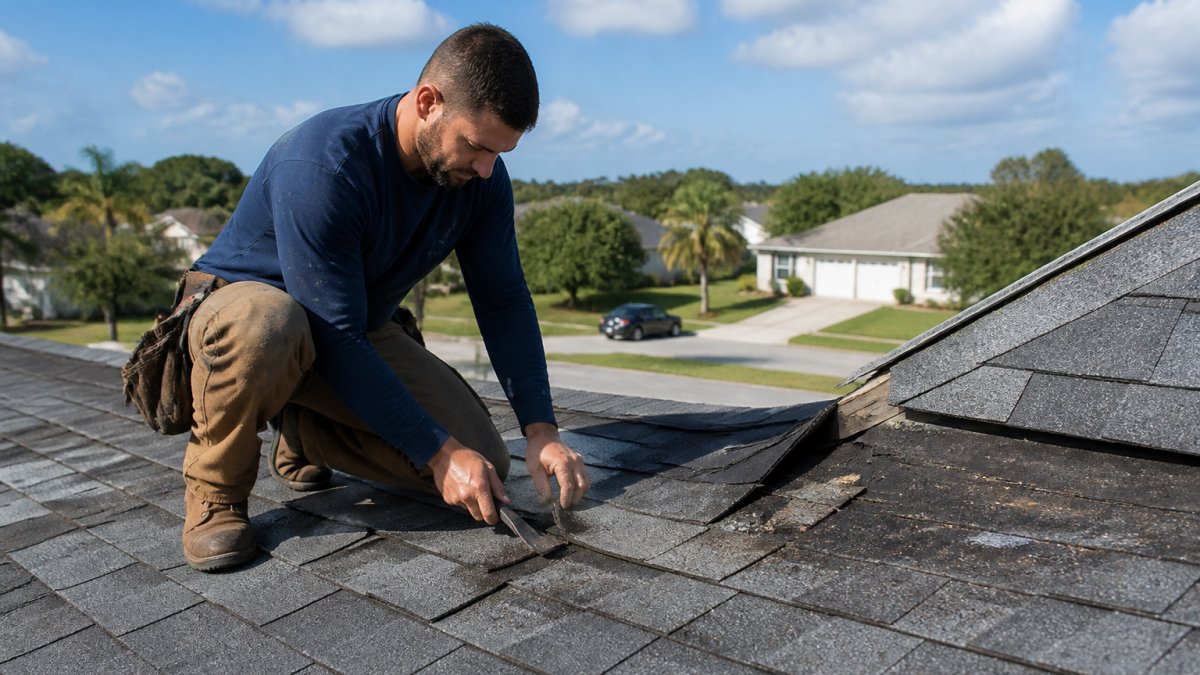
Signs you need a new roof include widespread granule loss, curling or cracked shingles across multiple slopes, sagging, daylight visible through the deck, and repeated leaks in different spots.
The distinction matters because shingles age as a system. A handful of damaged shingles after a wind event is a repair. Shingles that crumble when touched across an entire slope are telling you the mat has dried out, and patching that surface fixes nothing underneath.
Damage That Usually Means Replacement
- Sagging or a spongy deck underfoot: the structure is compromised.
- Widespread granule loss: shingles are near the end of their service life.
- Multiple leaks in separate locations: water is finding several paths in.
What most guides miss is that a single dramatic sign beats a dozen minor ones. One sagging section outweighs some cosmetic wear every time.
Your Roof Inspection Checklist Before You Commit
A proper roof inspection covers the shingles, flashing, underlayment, deck, attic, ventilation, and drainage. Ask for photos of every finding, and get the assessment in writing before you authorize any work.
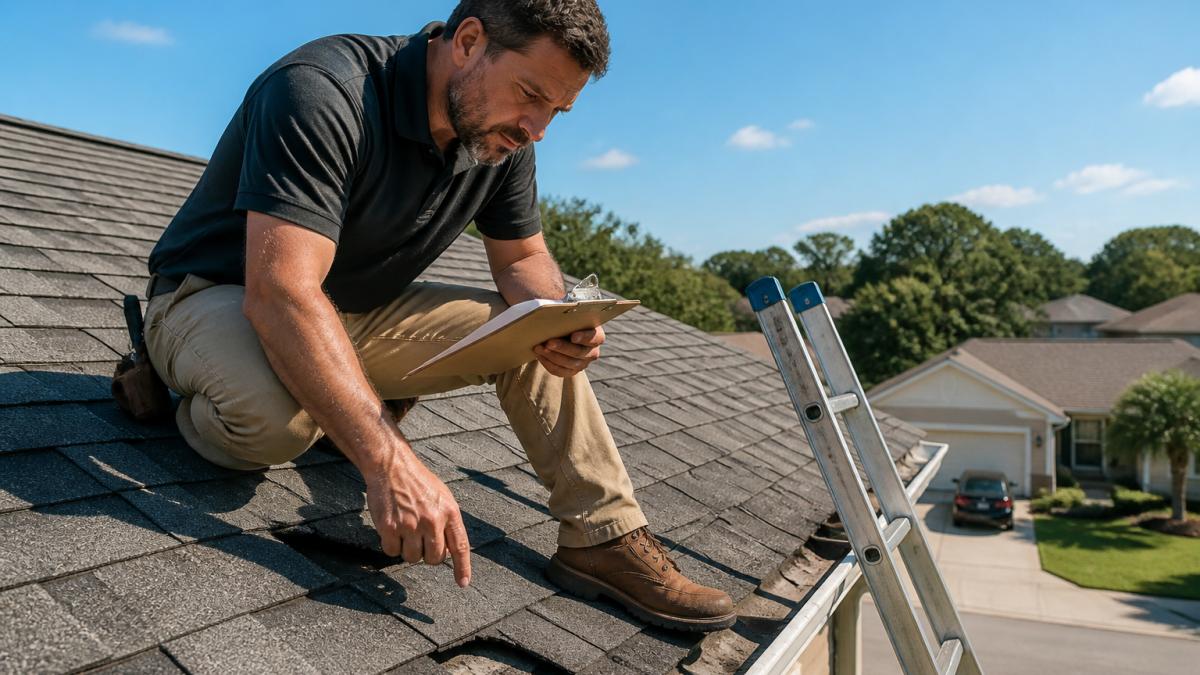
Use this checklist when you walk the assessment with your contractor:
- Shingle condition: granule loss, curling, cracking, missing tabs
- Flashing at chimneys, valleys, skylights, and pipe boots
- Underlayment condition where visible at edges and penetrations
At Roofing Done Right, our free roof evaluation follows exactly this sequence, and we photograph each finding so you see what we see. A checklist you can't verify is just a sales pitch.
Roof Repair vs Replacement Cost: What Actually Drives the Number
Roof repair cost and roof replacement cost are driven by different variables. A repair is priced by the number of problem areas, access difficulty, and whether matching materials exist. A replacement is priced by square footage, material choice, tear-off layers, deck repairs, and roof complexity. Most homeowners want a single number, but the honest answer is that the number is built from a stack of line items, and knowing those line items is how you compare bids without getting played.
The Line Items Behind Every Quote
A repair quote usually contains labor, matching shingles or sealant, flashing, and a service call minimum. A replacement quote contains tear-off, disposal, underlayment, ice-and-water shield, drip edge, flashing, ventilation, shingles or panels, labor, and permits. When one bid is dramatically lower than another, the difference is almost always a missing line item, not a better deal.
| Cost Driver | Repair Impact | Replacement Impact |
|---|---|---|
| Affected area | Small, localized | Entire roof surface |
| Labor | Short, targeted visit | Multi-day crew |
| Materials | Matching shingles, sealant, flashing | Full roofing system |
| Deck work | Rare | Common after tear-off |
| Disposal | Minimal | Full tear-off and haul-away |
| Permits | Usually none | Often required |
| Longevity gained | Years, if caught early | Full new service life |
How to Compare a Repair Quote to a Replacement Quote
The fair comparison is not repair price versus replacement price. It is repair price divided by years gained versus replacement price divided by full service life.
A practical way to run the math without inventing numbers: ask each contractor for the expected years gained by the repair, the expected service life of the replacement, and the full scope in writing.
Hidden Costs That Show Up After the Tear-Off
The number that surprises homeowners is rarely the shingles. It's what's underneath them.
- Rotted decking: soft panels must be replaced before new roofing goes down. Ask for a per-sheet price before work begins.
- Deteriorated underlayment: a full replacement always includes new underlayment; a repair may not.
- Ventilation and insulation gaps: poor attic ventilation shortens roof life and drives moisture damage.
Why We Quote Every Job Individually
Pricing depends on the size and pitch of your roof, the material, the number of penetrations, and what the tear-off reveals. We quote every job individually rather than publish a number that won't match your roof. For current pricing, request a free estimate, and ask for the line items above so you can compare bids apples to apples.
Roof Age, Material Lifespan, and Repairability
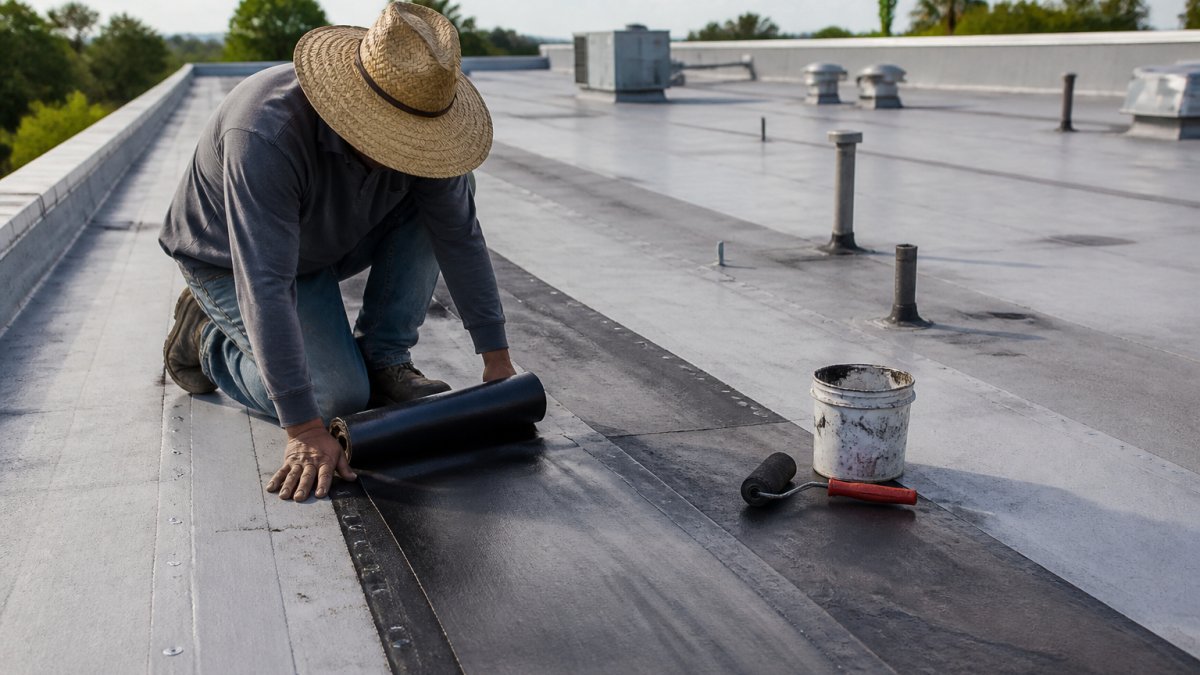
Material lifespan and repairability decide whether a fix is worth doing. Asphalt shingles are the most common choice and the easiest to patch when matching material is available. Metal roofing lasts longer and is repairable in sections.
| Material | Relative Lifespan | Repairability |
|---|---|---|
| Asphalt shingles | Standard | High, if matching shingles exist |
| Metal roofing | Long | Moderate, sectional repairs |
| Tile roofing | Long | Moderate, fragile underfoot |
| Flat/low-slope systems | Varies | Moderate, seam and membrane work |
A repair only makes sense if the surrounding roof has meaningful life left. Patching a roof that's already past its expected lifespan is a stopgap, not a solution.
Request a Free Roofing Estimate →
The Roof Replacement Timeline, Start to Finish
A roof replacement timeline typically runs from a few days to a week or more for a standard residential roof, depending on size, complexity, weather, and material availability. The clock starts well before the crew arrives.
- Inspection and estimate: document the damage and scope the work.
- Material selection and ordering: confirm shingles and lead times.
- Permits: filed and approved before work begins.
- Tear-off and deck inspection: remove old roofing, assess the deck.
- Underlayment and flashing: the waterproofing layer goes down first.
- Installation: shingles or panels installed to manufacturer spec.
- Cleanup and final walkthrough: magnet sweep for nails, then sign-off.
That last step is where reputations are made. We protect landscaping, driveways, and walkways during the job and run a nail sweep at the end, because a beautiful roof with a nail in the lawn is still a bad experience.
Insurance, Warranties, and Long-Term Value
Insurance may cover storm damage, but it rarely covers wear and tear, and the claim usually hinges on a licensed contractor's documentation. Warranties fall into two buckets: the manufacturer's material warranty and the contractor's workmanship warranty. Both matter, and both can be quietly voided by the wrong repair.
What Insurance Typically Covers, and What It Doesn't
Most policies draw a line between sudden, accidental damage and gradual deterioration. A wind event that peels shingles off one slope is usually a covered peril. A roof that has been losing granules for years is usually maintenance, and maintenance is not a covered loss.
A common pattern is that a claim is denied not because the damage was excluded, but because the homeowner could not show when it happened. That is why documentation matters more than argument.
Documentation to Gather Before You File
- Photos and video of the damage from the ground and, if safe, from the roof, dated.
- A written contractor assessment that separates storm damage from pre-existing wear.
- A timeline of when you first noticed the issue and any weather events in between.
How Repair Choices Affect Your Warranty
Manufacturer warranties typically cover material defects, not installation errors, and many require installation by a qualified contractor to remain valid. Workmanship warranties cover the labor, the part most likely to fail first.
Before you authorize any work, ask two questions: Does this repair preserve my existing warranty, and does the replacement come with a written workmanship warranty? Get the answer in writing.
Long-Term Value: When Replacement Wins
Long-term value favors replacement when repairs start repeating. Two repairs in three years often costs more than one replacement, and the replacement resets the clock on lifespan and warranty coverage. The same logic applies to insurance: a roof near the end of its life may be a poor candidate for a claim-driven repair, because the next storm will start the process over.
If you're navigating a claim, ask for a contractor assessment that documents the damage thoroughly. Roofing Done Right works with homeowners and their representatives to provide clear, photo-backed evaluations.
Conclusion: Match the Fix to the Damage
The hardest part isn't choosing between roof repair and replacement. It's being honest about which one your roof is telling you it needs.
If you're in Volusia County and want a straight answer instead of a sales pitch, Roofing Done Right offers free roof evaluations, licensed workmanship, careful protection of your property, and a cleanup you won't have to redo.
Get a free roof evaluation from Roofing Done Right and match the fix to the damage.
Frequently Asked Questions
How do I know if my roof needs repair or replacement?
Start with the damage itself. A single missing shingle, one cracked flashing seal, or a leak traced to a small area usually points to roof repair. Replacement becomes the better call when damage covers a large share of the roof, shingles are brittle and failing across several slopes, or the roof deck underneath is soft or water-stained. Roof age matters too: a 20-year-old asphalt roof near the end of its expected lifespan rarely justifies a major repair. A professional roof inspection settles the question with photos and a written assessment.
How old should a roof be before it is replaced?
There is no fixed age that triggers replacement, but material lifespan sets the benchmark. Asphalt shingles typically last 20 to 25 years, metal roofing can reach 40 to 70, and tile often runs 50 or more. A roof past 75 percent of its expected lifespan with active leaks or widespread shingle failure is usually a replacement candidate. A younger roof with isolated damage is a repair candidate. Roof age alone never decides it; condition and extent of damage carry equal weight.
What are the signs you need a new roof?
Watch for shingles that are curling, cracking, or losing granules, plus missing shingles after wind damage. Check for sagging rooflines, dark water stains on ceilings, and daylight showing through the attic deck. Persistent leaks that return after repeated repairs are a strong signal. So is widespread flashing failure around chimneys and vents. Granule buildup in gutters and a roof past its expected lifespan round out the list. Any two or three together warrant a professional assessment.
How long does a roof replacement take?
Most residential roof replacements take one to three days once materials are on site. A simple single-story roof with good access can finish in a day. Larger homes, steep pitches, multiple layers of old roofing to tear off, or Florida heat that limits crew hours push the roof replacement timeline toward three to five days. Weather delays and permit approvals add time before work starts. Ask for a written schedule and a daily start time so you know what to expect.
Should I get a roof inspection before deciding to replace it?
Yes. An inspection gives you documented evidence instead of guesswork. A contractor should check shingles, flashing, underlayment, roof deck, ventilation, and attic moisture, then show you photos of what they found. That report supports a repair decision, a replacement decision, or an insurance claim. It also protects you from paying for a full replacement when a targeted roof repair would have solved the problem. Many contractors, including Roofing Done Right, offer a free roof evaluation.
How many times can a roof be repaired?
There is no hard limit, but repeated repairs stop making financial sense. If you are patching the same area every year, or leaks keep appearing in new spots, the money adds up faster than a replacement would. Each repair also disturbs surrounding shingles and can void certain warranties. A practical rule: if repair costs start approaching a meaningful fraction of replacement cost, or repairs recur within a couple of years, replacement offers better long-term value.