 how-to
8 Signs of Storm Damage on Your Roof to Check
Last Updated: October 30, 2026
Quick Summary
The signs of storm damage on a roof include missing, cracked, or lifted shingles, granule loss and shingle debris in gutters, hail dents on vents and ridges, damaged flashing, and interior water stains or leaks. Check these from the ground with binoculars rather than climbing, since a post-storm roof is dangerous to walk.
- Missing shingles appear as dark gaps in the roof field and are the easiest sign to spot from the ground.
- Granule loss shows up as coarse sand-like grit in gutters and piles below downspouts after a storm.
- Wind damage often looks like curled shingle edges, exposed nail heads, or loose materials rather than obvious destruction.
- Water intrusion usually appears inside first, as ceiling stains, bubbling paint, or musty attic smells.
- Document all damage with dated photos and get a licensed roofer's written assessment before filing an insurance claim.
Table of Contents
- Why Storm Damage Gets Missed (and Why It Costs You)
- 8 Signs of Storm Damage to Look For on Your Roof
- Signs of Wind Damage to Roof You Should Never Ignore
- How to Inspect Your Roof After a Storm Safely
- Interior Warning Signs and Hidden Damage
- What to Do After Roof Storm Damage: Immediate Steps
- How to Document Roof Damage for Insurance
- Schedule Your Free Roof Evaluation
- Frequently Asked Questions
Why Storm Damage Gets Missed (and Why It Costs You)
Most roof damage after a storm is not dramatic. It is quiet, small, and easy to walk past.
A homeowner hears wind and rain overnight, checks the ceiling the next morning, sees nothing, and moves on.
Signs of storm damage roof problems are often subtle from the ground. A lifted shingle edge.
Below, we'll show you exactly how to spot each one safely, without climbing a ladder.
8 Signs of Storm Damage to Look For on Your Roof
Here are eight common warning signs to look for.
- Missing shingles
- Cracked or torn shingles
- Lifted or curled shingle edges
- Granule loss and shingle debris in gutters
- Dents from hail
- Damage to edges, ridges, and vents
- Loose or damaged flashing
- Interior water stains or leaks
Missing, Cracked, or Lifted Shingles
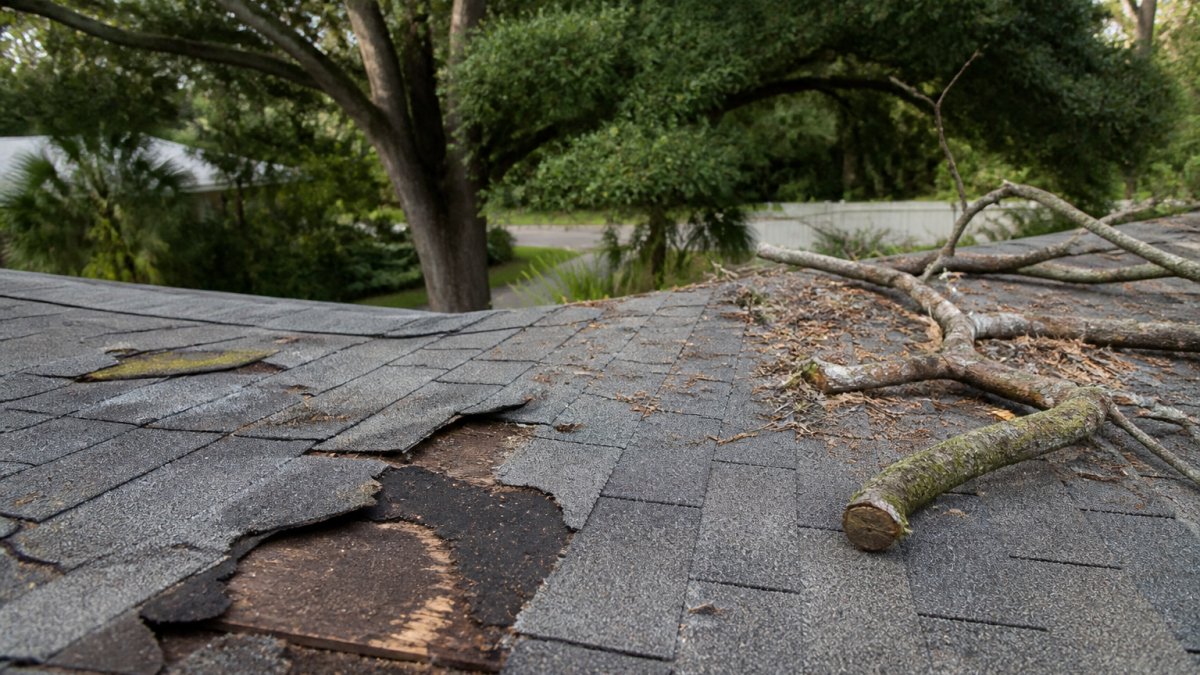
Missing shingles are the clearest sign, and the easiest to spot from the ground. Look for dark gaps in the roof field where shingles have blown off entirely.
Cracked and torn shingles are harder. Wind flexes shingles, and that stress shows up as splits. Lifted edges catch the next rain and push water underneath.
Watch out: a shingle that looks fine from the ground can be sealed down but cracked underneath.
Granule Loss and Shingle Debris in Gutters
Roofing granules protect the asphalt layer from sun and rain. Hail knocks them loose.
Check your gutters and downspouts for grit that looks like coarse sand. Granule loss on its own is not an emergency, but heavy loss means the shingle is aging fast.
Also look at the ground below downspouts. Piles of dark grit after a storm are a real signal.
Dents from Hail and Damage to Edges, Ridges, and Vents
Hail damage shows up as soft dents, not holes. Check metal roof vents, ridge caps, and gutters for dimples.
Dented shingles may look bruised, with a soft spot where granules are gone. Damage to edges and ridges matters most, because those areas take the first hit from wind-driven rain.
If you see dents on vents or gutters, the shingles above them likely took a beating too.
Signs of Wind Damage to Roof You Should Never Ignore
Wind damage rarely looks like wind damage. It looks like a shingle that is slightly out of line.
Three things to check:
- Curled shingles. Edges that lift and curl away from the roof.
- Exposed nail heads. Wind can push shingles back and leave nails showing.
- Loose materials. Anything flapping, sagging, or sitting out of place.
Wind-driven rain is the real threat. Once a shingle edge lifts, water gets behind it. That water travels sideways, not down. It often shows up far from the actual damage.
If your neighbors lost shingles and you did not, still get an inspection. Wind damage is not evenly spread.
How to Inspect Your Roof After a Storm Safely
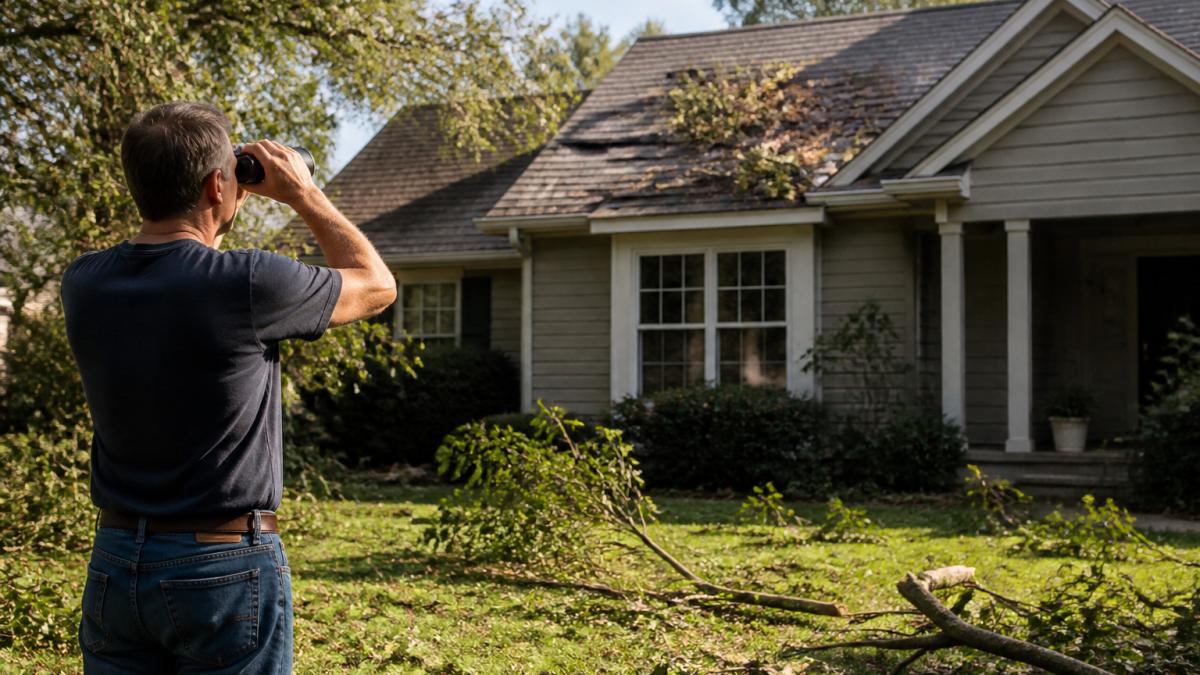
The safest roof inspection happens on the ground. Stay off the roof. Wet shingles, loose granules, and hidden soft spots make a post-storm roof one of the most dangerous surfaces on the property, and most falls happen during exactly this kind of well-intentioned check.
What You Can Check From the Ground
You do not need to climb to gather useful information. From the yard, you can confirm:
- Missing shingles. Dark gaps or bare decking in the roof field.
- Lifted, curled, or misaligned edges. Look along the rake and eave lines where shingles meet the trim.
- Debris on the roof. Branches, leaves, and granules that have collected in valleys or behind ridges.
Tools That Make a Ground Check Reliable
- Binoculars or a phone with zoom. A 10x pair lets you read shingle edges and vent condition from the driveway.
- A step stool, not a ladder. Use it only to reach gutter height at a downspout, never to access the roof line.
- A notebook or phone notes app. Record the date, time, weather, and what you saw on each slope.
Why Climbing Is the Wrong Move
A roof after a storm combines the three worst conditions for a fall: slick surfaces, obscured edges, and structural uncertainty. Wind-lifted shingles can look sealed but be loose underfoot, and hail-bruised shingles hide soft spots that give way. Fallen branches and loose materials on the roof are trip hazards, and a wet roof pitch that feels fine in dry weather can be treacherous after rain or snow.
If you cannot see a problem clearly from the ground, that is the signal to call a professional, not to get closer.
Request a Free Roofing Estimate →
A Simple Perimeter Walk
- Start at the front and walk the full perimeter. Look up at each slope from a distance, then move closer.
- Scan the roof field first, then the edges. Missing shingles and lifted edges are easiest to spot against the skyline.
- Check the ground below downspouts and valleys. Shingle pieces and granule piles point to specific slopes.
- Look at the gutters from a step stool. Note sagging, separation, and grit.
- Photograph each slope and any interior concern. Wide shots first, then close-ups.
- Write down what you saw and when. Dates and weather details matter later.
If anything looks unsafe, stop and call a professional.
Interior Warning Signs and Hidden Damage
Water intrusion often shows up inside before it shows outside. That is because roof damage rarely lets water straight down. It lets water in at an edge, a flashing joint, or a vent, and the water travels sideways along decking and framing before it finds a path to the ceiling.
What to Look For Inside
- Ceiling stains or discoloration. Brown rings, yellow halos, or spreading gray patches on drywall.
- Peeling or bubbling paint. Paint that lifts on a ceiling often means moisture behind it.
- Damp spots near vents, light fixtures, and chimneys. These are common entry points for hidden leaks.
Why Hidden Damage Is Common at Edges, Ridges, and Vents
Those are the spots water reaches first and the spots you cannot see from the ground. Flashing around a chimney or vent can pull loose in wind without any visible shingle loss. Ridge caps take the first hit from wind-driven rain, and a small gap there can feed moisture into the attic for weeks before a stain appears.
Timing Matters
A leak that appears days or weeks after a storm is not unusual. Water can soak insulation and decking slowly, and the stain only shows once the drywall is saturated. If you see a stain that grows after each rain, treat it as an active leak and act on it.
When to Treat It as Urgent
Some interior signs are emergencies: a sagging ceiling, water actively dripping, or a musty smell combined with visible dampness in the attic. Others, like a small, stable stain, can be scheduled for inspection. The difference is whether water is actively entering now or has already stopped.
For active interior leaks, see how to schedule emergency roof repair.
What to Do After Roof Storm Damage: Immediate Steps
Act in this order. It protects your home and your claim.
- Stay safe. Avoid the roof. Watch for fallen power lines and sagging ceilings.
- Document what you see. Photos and video, inside and out.
- Prevent more damage. Move valuables. Place buckets under active leaks.
- Clean up debris. Clear branches and loose materials from the yard.
- Call a licensed roofer. Get an evaluation before you file.
For active damage, how to schedule emergency roof repair walks through the fastest path to a temporary fix. If you are dealing with branches and debris, how to handle roof cleanup covers the safe way to clear it.
How to Document Roof Damage for Insurance
Insurance claims succeed or fail on documentation. Start before you call your insurer.
What to capture:
- Wide photos of each roof slope
- Close-ups of damaged shingles, dents, and flashing
- Interior stains with a tape measure for scale
What to keep:
- Your policy number and claim number
- Receipts for any emergency repairs
- The roofer's written assessment
A licensed contractor's written assessment can support your claim. Ask for it in writing, with photos attached.
For a full walkthrough, see how to document roof damage for insurance. For tips on organizing your paperwork, read roof insurance claim documentation tips.
| Problem | What to Check | Why It Matters |
|---|---|---|
| Missing shingles | Gaps in roof field | Direct water entry |
| Granule loss | Gutters, downspouts | Shingle aging fast |
| Hail dents | Vents, ridges, gutters | Hidden shingle bruising |
| Wind damage | Curled edges, exposed nails | Wind-driven rain entry |
| Interior stains | Ceilings, attic | Confirms active leak |
Schedule Your Free Roof Evaluation
Spotting the signs is step one. Confirming them is step two.
At Roofing Done Right, we serve homeowners and commercial property managers across Volusia County. We are a Florida licensed roofer, and we offer a free roof evaluation.
Here is what you can expect:
- A full inspection of shingles, flashing, vents, and edges
- Careful protection of your landscaping, driveway, and walkways
- Thorough cleanup and nail removal when work is done
We can source original shingles for repairs. One customer shared: "They were even able to go out of their way and source the original shingles to perform the repair."
Get your free roof inspection and find out exactly what the storm left behind.
Frequently Asked Questions
How can I tell if my roof needs repair after a storm?
Look for missing, lifted, or cracked shingles, granules collecting in gutters, dents on vents or flashing, and water stains on ceilings. Check for daylight visible through the roof deck from inside the attic. If you spot any of these signs of storm damage, avoid climbing up yourself and call a licensed roofer for a professional inspection. Document what you see with photos from the ground before anyone touches the roof.
Can roof damage be hidden after a storm?
Yes. Wind-driven rain can force water under intact shingles, causing rot or mold in the decking without obvious surface damage. Lifted shingles may look fine from the ground but leave exposed nail heads and small gaps. Interior water stains often appear days or weeks later. That is why a professional roof inspection matters even when the roof looks undamaged, especially after heavy wind or hail.
What should I document before contacting my insurance company?
Photograph all visible damage from the ground, including missing shingles, dents, and debris. Note the date of the storm and keep any fallen branches as evidence. Save receipts for temporary repairs like tarps. Write down interior damage such as water stains or leaks. A licensed contractor's written assessment strengthens your claim, so schedule an inspection and ask for documentation you can submit to your adjuster.
How soon should I have storm damage inspected?
Schedule an inspection as soon as possible after a storm, ideally within a few days. Quick action limits further water intrusion and gives you fresher evidence for an insurance claim. Many policies require prompt reporting of damage. If you see active leaks, call immediately for emergency mitigation. A free roof evaluation from a licensed local roofer gives you a clear picture before small problems become expensive repairs.
Storm damage does not get better with time. Small shingle damage turns into water intrusion, and water intrusion turns into a claim that is harder to prove. Roofing Done Right handles inspections, repairs, and full replacements for homes and businesses throughout Volusia County, with free evaluations, written estimates, and cleanup that leaves your property the way we found it. Get started with Roofing Done Right and get a clear answer on your roof before the next storm arrives.