 how-to
How to Prevent Roof Leaks After Storms
Last Updated: November 4, 2026
Quick Summary
Preventing roof leaks after storms starts with a roof inspection and small fixes done in calm weather, before the first drop. Wind and hail damage often creates breaches that let water travel along framing, so leaks appear hours or days later. Catch lifted shingles and worn flashing early to keep storm water out.
- Roofing-related claims fell 11.9% through August, yet storms still find weak spots.
- Never poke a sagging, water-filled ceiling; it can collapse, so call a pro instead.
- Overlap tarp edges by at least 12 inches and anchor with furring strips and screws.
- Never apply roofing tape or caulk to a wet surface; it peels within hours.
- Average residential roof replacement costs rose 33% and repair costs rose 25% in 2025.
Table of Contents
- Storm-Ready Roofing: Prevention Before the First Drop
- How to Stop a Roof Leak From Inside During Heavy Rain
- Temporary Roof Leak Protection: Tarps, Sealants, and Their Limits
- How to File a Roof Leak Insurance Claim After a Storm
- Storm Damage Inspection Checklist for Your Roof and Attic
- When to Stop DIY and Call a Professional Roofer
- Post-Leak Drying and Recovery: What Happens After the Drip Stops
- Get a Free Roof Evaluation Before the Next Storm Season
- Frequently Asked Questions
Storm-Ready Roofing: Prevention Before the First Drop
Water damage rarely announces itself. According to Verisk's roofing claims analysis reported by Roofing Contractor, roofing-related claims fell 11.9% through August, and roofs exposed to hail of at least 1 inch declined more than 7%.
Preventing roof leaks after storms starts long before the first drop. The homes that stay dry are often the ones that got a roof inspection and a few small fixes done in calm weather. The homes that flood are often the ones that skipped it.
Below, we'll show you exactly how to protect your roof before, during, and after a storm, and when it's time to call a pro.
Why Roof Leaks Show Up After Storms, Not During Them
A roof leak is water finding a path through a breach in your roofing materials and into your home. That breach often forms during the storm, but the leak shows up hours or days later.
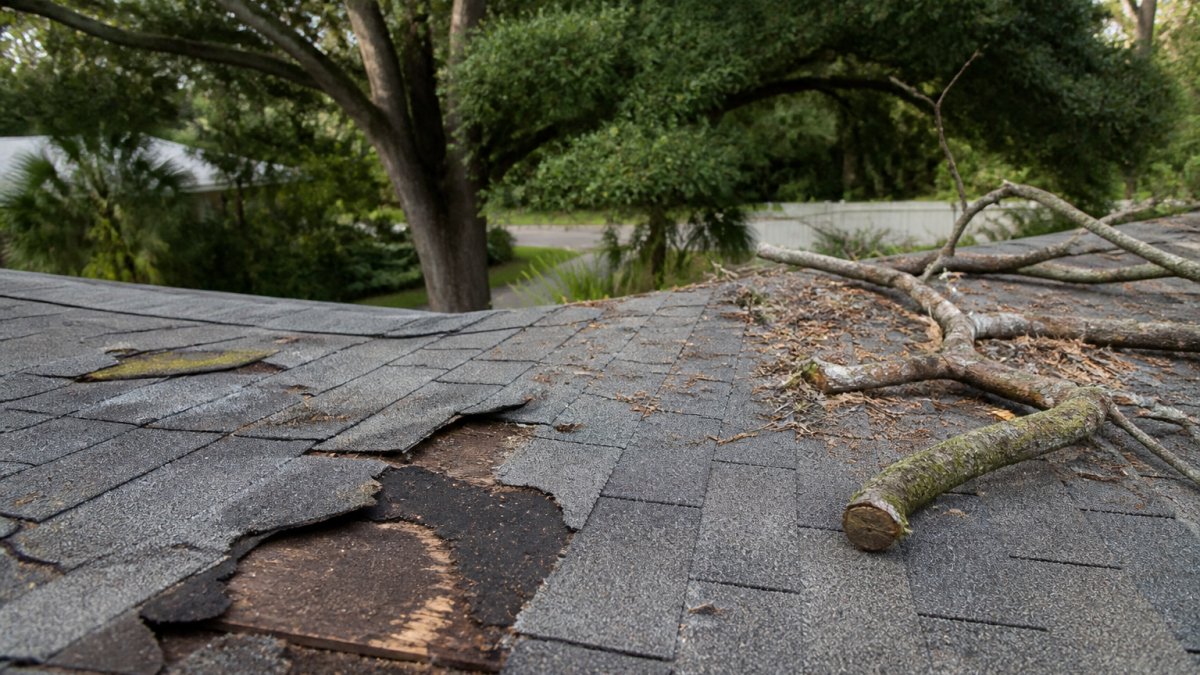
Here's why. Wind damage lifts shingles. Hail damage cracks them. Heavy rain then pushes water under those damaged shingles and into the roof decking. The water travels along framing before it ever reaches your ceiling.
That's why a water stain can appear far from the actual leak source. If you want to spot trouble early, learn the 8 signs of storm damage on your roof to check before water starts dripping.
How to Stop a Roof Leak From Inside During Heavy Rain
You can stop a roof leak from inside during heavy rain by containing the water and relieving pressure, not by climbing onto a wet roof. Safety comes first. Stay inside until the storm passes.
Trace the Water Before You Catch It
Water travels. A drip near your chimney may come from a failed roof valley ten feet away. Follow these steps:
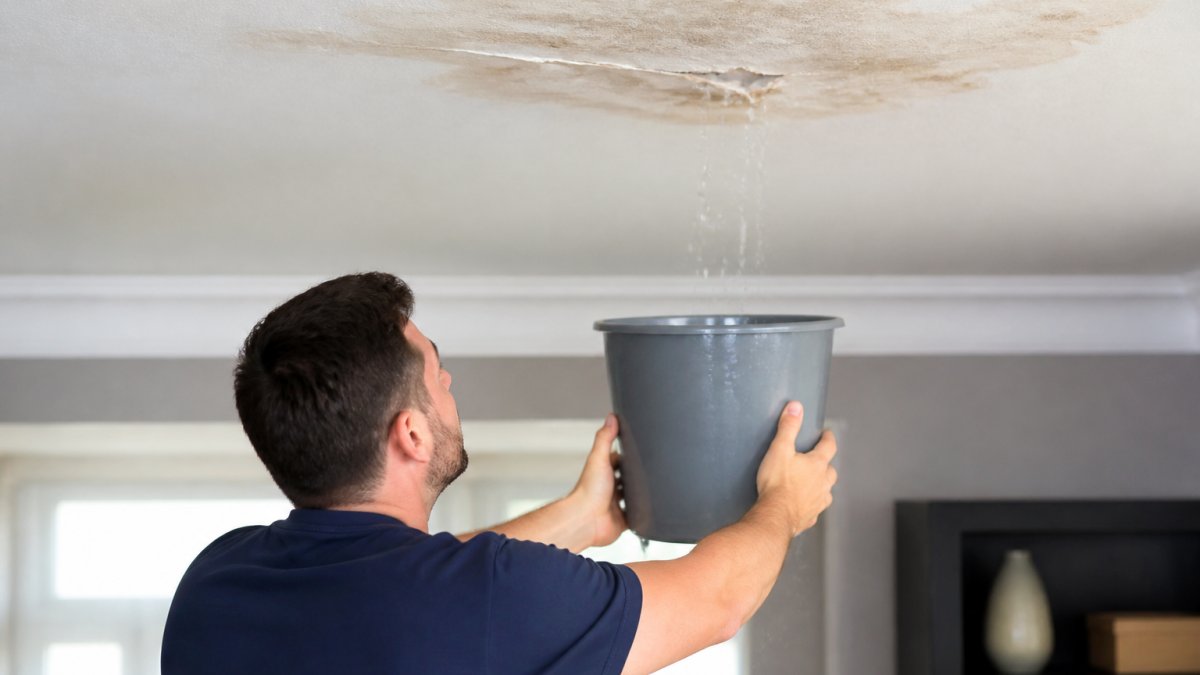
- Place buckets under active drips to protect floors and belongings.
- Move furniture, electronics, and rugs away from the leak zone.
- Use towels or sandbags to block water from spreading across the floor.
- Look up. Water stains on ceiling drywall show where the water pooled.
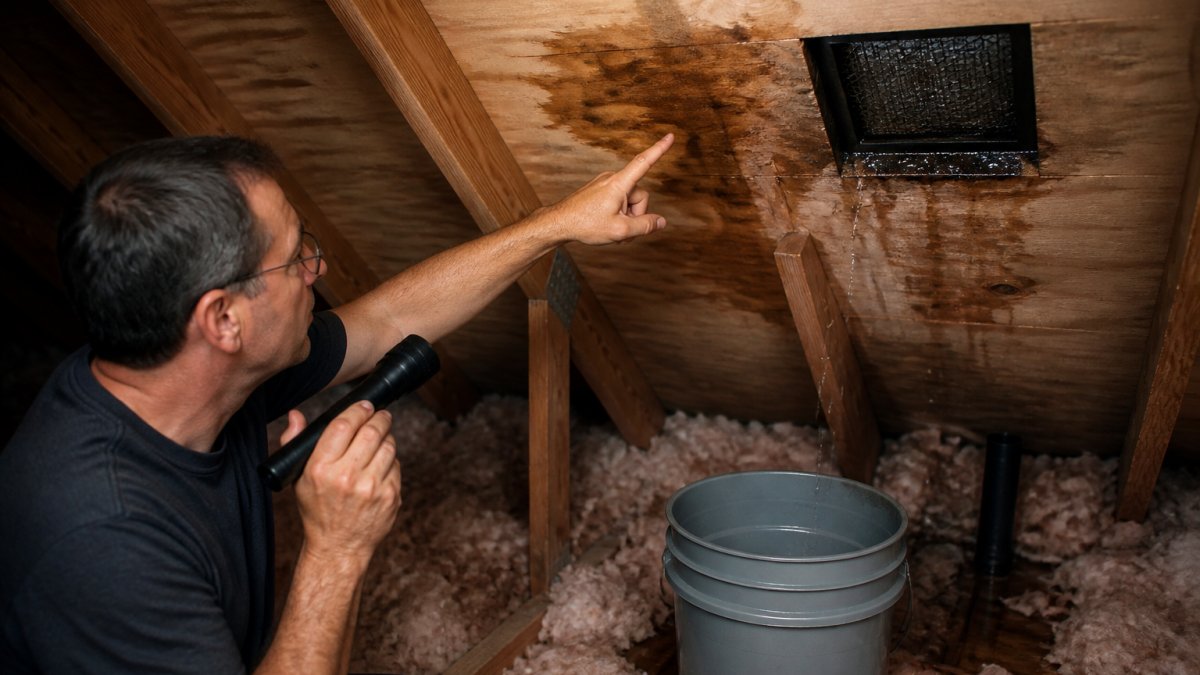
- Check the attic with a flashlight to trace the path back toward the roof decking.
Watch out: never poke a sagging, water-filled ceiling. It can collapse. Call a pro instead.
Temporary Roof Leak Protection: Tarps, Sealants, and Their Limits
Temporary roof leak protection buys you time. It does not fix the roof. A waterproof tarp, roofing tape, or roofing caulk can slow water intrusion until a professional roofer inspects the damage.
Here's what each option does, where it works best, and where it fails:
| Method | Best For | Application Notes | Limitation |
|---|---|---|---|
| Waterproof tarp (heavy-duty polyethylene) | Covering large damaged areas, missing shingles, or a compromised ridge | Overlap edges by at least 12 inches, run the tarp from the ridge down past the eaves, and secure with furring strips and screws, not just rope or bungees | Wind can tear it loose if not properly anchored; UV exposure degrades the plastic within weeks |
| Roofing tape (butyl or asphalt-based) | Small seams, flashing gaps, and around penetrations | Press firmly into clean, dry surfaces; works best on flat or low-slope sections | Fails on wet, dirty, or frozen surfaces; adhesion weakens with temperature swings |
| Roofing caulk (polyurethane or silicone) | Minor cracks around vents, chimneys, and skylights | Apply in a bead over the crack and tool it smooth; cures in a few hours | Short-lived, cracks again under heat and UV; not for active leaks or large gaps |
| Buckets and towels | Indoor water containment | Place under active drips; use towels or sandbags to block water from spreading across floors | Does nothing for the roof itself; requires emptying and monitoring |
Only tarp a roof in calm, dry conditions. Never work on a wet, steep roof. If you're unsure, wait for a professional.
Watch out: never apply roofing tape or caulk to a wet surface. It will peel within hours and give you a false sense of security. Dry the area with a towel or wait for a dry window.
For interior containment, focus on protecting belongings and preventing water from spreading to unaffected rooms.
If the leak is active and you cannot safely access the roof, document the damage and call a professional.
How to File a Roof Leak Insurance Claim After a Storm
A roof leak insurance claim after a storm succeeds or fails on documentation. Insurers want proof the damage came from the storm, not from neglect. Start collecting evidence the same day you notice the leak.
Follow these steps:
- Photograph water stains, dripping water, and damaged shingles.
- Keep every wet item until the adjuster sees it.
- Save receipts for emergency repairs and temporary protection.
- Write down the date and time you first noticed the leak.
- Request a licensed contractor's written assessment.
A proper paper trail makes the difference. Our guide on how to document roof damage for insurance walks through the full step-by-step process so your claim isn't denied on a technicality.
Storm Damage Inspection Checklist for Your Roof and Attic
A storm damage inspection is a systematic check of your roof's surface, edges, and attic for signs of water intrusion. Do it from the ground and inside the attic. Skip the ladder. Different storm types leave different signatures, so the checklist below separates what you can safely check yourself from what requires a professional.
Request a Free Roofing Estimate →
Wind Damage: What to Look For
Wind damage typically lifts or tears shingles, especially at ridges, edges, and hips. From the ground, use binoculars to scan for:
- Missing, lifted, or curled shingles on slopes and ridges
- Shingle granules collecting in gutters and downspouts (a sign of scouring)
- Loose or damaged vent pipe boots
- Bent or lifted flashing around the chimney
- Debris (branches, leaves) piled on the roof or lodged in valleys
Inside the attic, check for:
- Daylight showing through the roof boards
- Water stains on roof decking or rafters
- Damp insulation or musty smells
Hail Damage: What to Look For
Hail damage is often subtle from the ground. Look for:
- Dented or cracked roof flashing around the chimney
- Cracked skylight seals
- Granule loss on shingles (bare spots or dark patches)
- Dings or dents on metal vents, gutters, and downspouts
Hail damage to shingles can be hard to see without close inspection. A professional can safely walk the roof and identify bruised or fractured shingles that may not be visible from the ground.
Heavy Rain and Drainage Problems
Heavy rain exposes drainage failures. Check:
- Clogged gutters blocking drainage
- Water pooling near the foundation or in low spots
- Overflow stains on siding or fascia
- Water stains on ceiling drywall or attic decking
What Requires a Professional
Some checks are not safe for homeowners. Call a professional if you see:
- Any damage on a steep or multi-story roof
- Sagging ceiling or bulging drywall
- Water pooling near light fixtures or wiring
- Missing shingles across a large area
- Leaks that return after you patch them
Costs are rising, which makes early detection worth the effort. The 2026 Verisk U.S. Roof Report described in Roofing Reality Check found average residential roof replacement costs rose 33% and repair costs rose 25% in 2025. Catching a small leak now beats a full replacement later.
When to Stop DIY and Call a Professional Roofer
Stop DIY and call a professional roofer when the leak is active, the damage is widespread, or the roof itself is unsafe to walk. Water and electricity don't mix, and wet roofing materials are slippery.
Call a pro if you see any of these:
- Water pooling near light fixtures or wiring
- A sagging ceiling or bulging drywall
- Missing shingles across a large area
- Leaks that return after you patch them
- Any damage on a steep or multi-story roof
If the leak is beyond a bucket and a tarp, learn how to schedule emergency roof repair quickly. And when you hire, follow a clear process to hire an honest roofer so you avoid storm-chaser scams.
Post-Leak Drying and Recovery: What Happens After the Drip Stops
Drying is the step most homeowners skip, and it's the one that prevents mold growth. Standing moisture in insulation, drywall, and framing creates problems within days.
After the leak stops:
- Run fans and a dehumidifier in the affected rooms.
- Remove wet insulation and drywall where water soaked through.
- Check for musty odors, which signal mold growth.
- Watch for recurring water stains after the next rain.
A This Old House survey reported in 2026 found 25% of homeowners replaced their roofs because of active leaks. Drying properly protects the repair you just paid for.
Get a Free Roof Evaluation Before the Next Storm Season
Preventing roof leaks after storms comes down to preparation. A free roof evaluation catches the small problems, like a lifted shingle or worn flashing, before a storm turns them into a ceiling leak.
At Roofing Done Right, we serve homeowners and commercial property managers across Volusia County. We're a Florida licensed roofer, born and bred locally. Our process includes thorough cleanup and nail removal, and we take care to protect your landscaping, driveways, and walkways. We can source original shingles for repairs.
You can get your free roof inspection and know exactly where your roof stands before the next storm.
Frequently Asked Questions
How do you stop a leaking roof during heavy rain?
Move people and belongings away from the drip, then contain the water with a bucket or tub. If you can safely reach the attic, trace the water back to where it enters the roof decking and place a container there instead. Never climb onto a wet roof during a storm. Temporary fixes like roofing tape or a tarp wait until conditions are safe. Call a licensed roofer for emergency repair once the weather clears.
Does homeowners insurance cover roof leaks due to rain?
Most policies cover sudden damage from a storm event, such as wind-driven rain that tears off shingles or hail that cracks them. They typically exclude leaks caused by long-term neglect or normal wear. That is why documentation matters: take dated photos of missing shingles, damaged flashing, and interior water stains before you make temporary repairs. A licensed roofer's written assessment strengthens a roof leak insurance claim after a storm.
Can I put a tarp on my roof to stop leaks?
Yes, a waterproof tarp is the standard temporary roof leak protection after a storm. Wait until wind and rain have stopped, and never walk a wet or steep roof. Secure the tarp with 2x4s and roofing nails at the edges, overlapping the ridge so water runs off. A tarp buys days, not months. It will not fix damaged flashing, a failed roof valley, or missing shingles, so schedule a professional roof repair promptly.
How soon should I have a roof inspected after a storm?
Book an inspection as soon as the weather clears, especially if you saw missing shingles, granule loss, or interior water stains. Roofing-related claims fell through August, according to Verisk data reported by Roofing Contractor, but replacement and repair costs have been rising. Catching damage early keeps a small repair from becoming a full replacement. A free roof evaluation gives you documentation for insurance and a clear repair plan.
Your roof only needs one weak spot to let a storm inside. Don't wait for the drip. Get started with Roofing Done Right and a free roof evaluation, so you can fix the small issues now and stay dry all season.