 how-to
Flat Roof Repair for Businesses: A Step-by-Step Guide
Table of Contents
- Understanding Flat Roof Repair for Businesses
- How to Diagnose Flat Roof Problems
- Conducting a Commercial Roof Inspection Checklist
- Commercial Flat Roof Leak Repair Techniques
- Commercial Roof Repair vs. Replacement: Making the Right Choice
- Implementing a Commercial Roof Maintenance Plan
- Safety, Warranty, and Documentation
- Frequently Asked Questions
Last Updated: October 13, 2026
Understanding Flat Roof Repair for Businesses
Flat roof repair for businesses is one of the most critical maintenance tasks a property manager can undertake. Unlike pitched roofs that shed water quickly, flat roofs require active management to prevent pooling, leaks, and structural damage. When water sits on a roof for extended periods, it penetrates seams, weakens membranes, and eventually reaches the building interior, causing costly damage to equipment, inventory, and operations.
The good news: most flat roof problems are preventable with early detection and timely intervention. At Roofing Done Right, we've helped numerous commercial property owners in the region avoid emergency repairs by catching issues before they escalate. Understanding the fundamentals of flat roof repair for businesses allows you to make informed decisions about maintenance, repair scope, and whether replacement makes financial sense.
This guide walks you through diagnosing problems, conducting inspections, evaluating repair versus replacement, and implementing a maintenance plan that protects your investment. Whether you manage a warehouse, strip mall, or industrial complex, these steps apply across all commercial property types.
How to Diagnose Flat Roof Problems
Identifying flat roof damage early prevents emergency situations and keeps repair costs manageable. Start by looking for visible warning signs, then move to systematic inspection of the roof surface itself.
Signs of Damage and Leaks
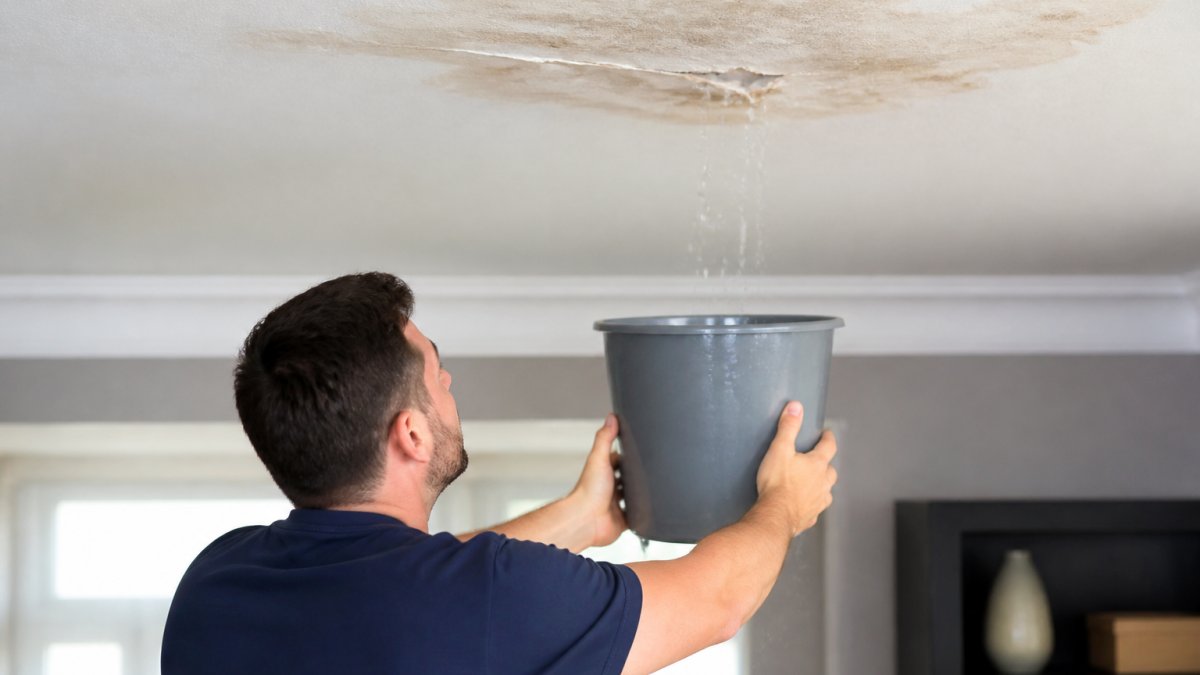
Water stains on interior ceilings are the most obvious indicator that your flat roof needs attention. Look for discoloration, peeling paint, or soft spots in drywall, these point to active water intrusion. Check your building's interior regularly after heavy rain or during spring thaw.
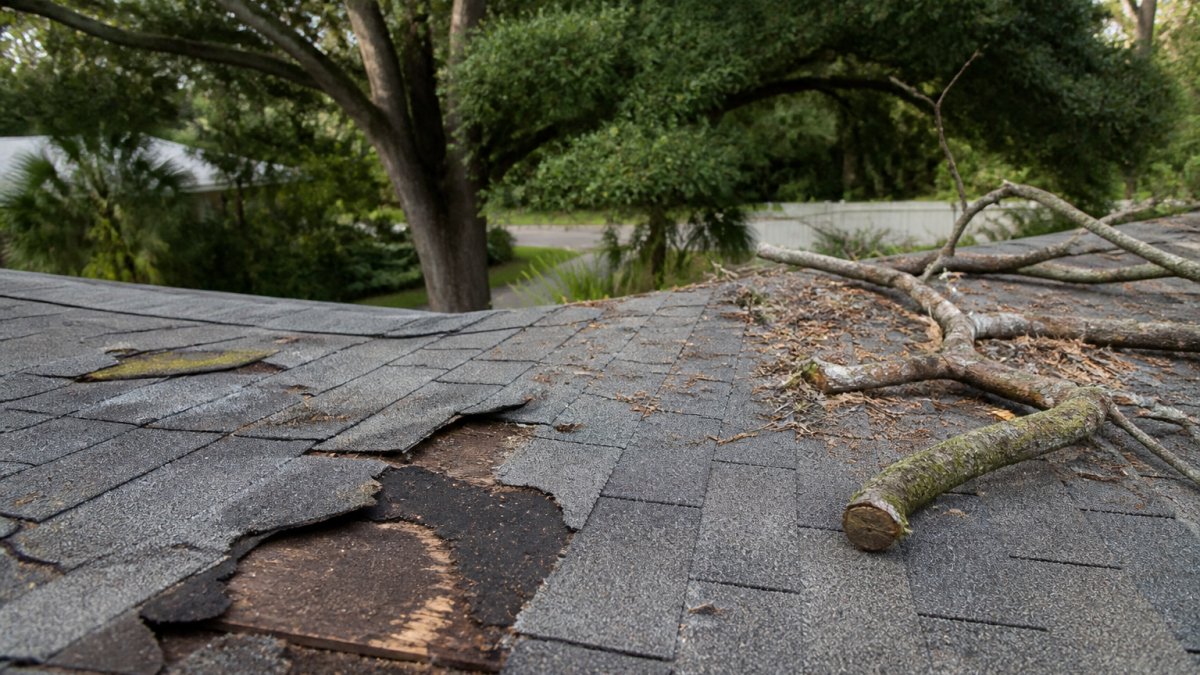
Exterior signs are equally important. Blistering or bubbling on the roof membrane indicates trapped moisture beneath the surface. Cracked caulking around seams, roof penetrations, and flashing suggests the sealant has failed. Debris accumulation in roof valleys and around drains slows water drainage and increases ponding risk.
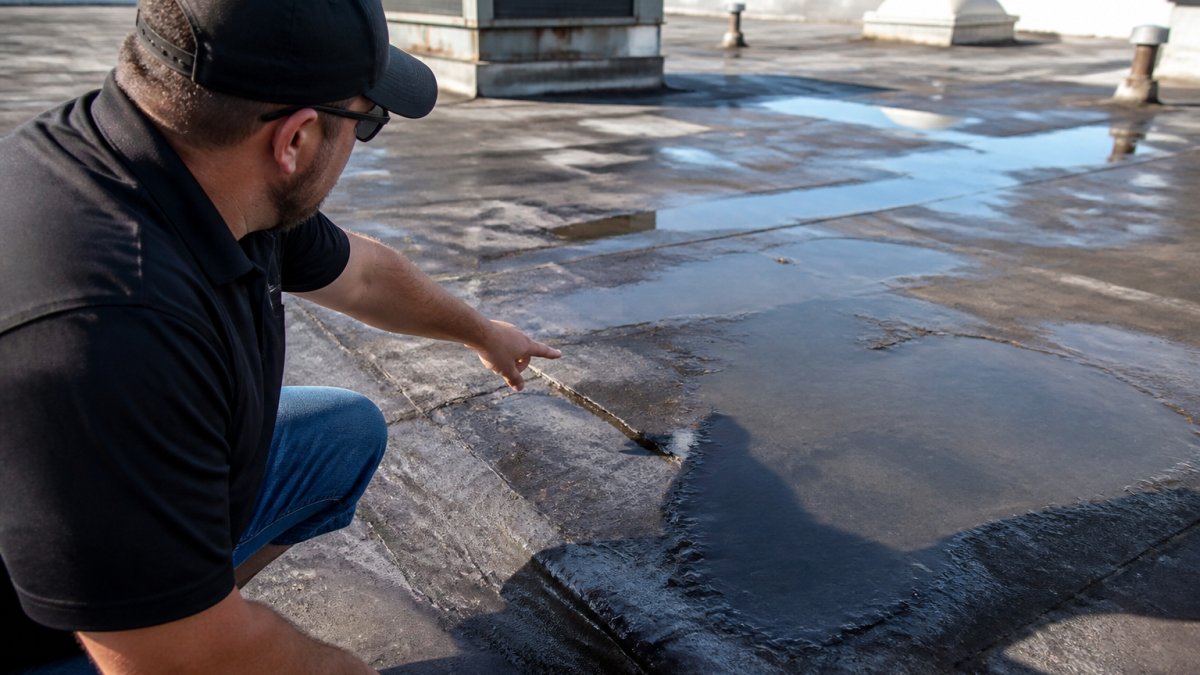
Pay attention to the condition of your roof's edges and corners. These areas experience the most weather exposure and typically fail first. If you notice separation between flashing and the membrane, or rust stains on metal trim, water intrusion is likely already underway.
Locating the Source of Water Intrusion
Water doesn't always leak directly below the damage point. It travels along the membrane, following slopes and seams before finding an opening. This means the interior leak location may be 10 or 20 feet away from the actual roof damage.
Start your investigation at the highest point of the roof. Walk the surface systematically, moving downward. Look for cracks, punctures, or membrane separation. Check all roof penetrations, HVAC units, vents, skylights, electrical conduits. These are common failure points because the sealant around them degrades faster than the surrounding membrane.
Trace the path water would take if it entered at each potential damage point. Consider the roof's slope (even minimal slope matters on flat roofs). Follow seams and flashing lines.
On clear days, use binoculars to inspect the roof from ground level if safe access is limited. This gives you a preliminary view before conducting a full inspection. Look for discoloration patterns that indicate water flow paths.
Conducting a Commercial Roof Inspection Checklist
A thorough inspection is the foundation of effective flat roof repair for businesses. This systematic approach identifies all issues in one visit, preventing multiple service calls and allowing you to prioritize repairs by urgency.
Before climbing onto the roof:
- Check weather conditions, avoid inspections during rain or high winds
- Notify building occupants that roof access is underway
- Ensure proper safety equipment is available (harness, non-slip footwear, first aid kit)
- Document the inspection with photographs and notes
On the roof surface:
- Photograph all visible damage, including close-ups of cracks, blisters, and seam separation
- Measure damaged areas and note their location relative to building features (near south wall, center of roof, etc.)
- Check membrane condition across the entire surface, not just problem areas
- Inspect all roof penetrations for sealant failure and corrosion
- Examine flashing around edges, corners, and transitions
- Clear debris from drains and verify water flows freely
- Look for ponding water and mark areas where it collects
Documentation:
- Record the roof's approximate age and material type (EPDM rubber, TPO, modified bitumen, etc.)
- Note any previous repairs and their condition
- Identify areas of concern and their severity (minor, moderate, urgent)
- Note weather exposure (wind, sun, salt air) that may have accelerated degradation
This inspection provides the information needed to determine whether flat roof repair for businesses is feasible or whether replacement is more cost-effective long-term.
Commercial Flat Roof Leak Repair Techniques
Once you've identified the damage, understanding repair options helps you choose the most effective solution. Different materials require different approaches, and repair scope determines both cost and durability.
Patching and Sealing Methods
Small punctures and cracks in the membrane can often be sealed without removing the entire roof. Roofing contractors use several techniques depending on membrane type and damage severity.
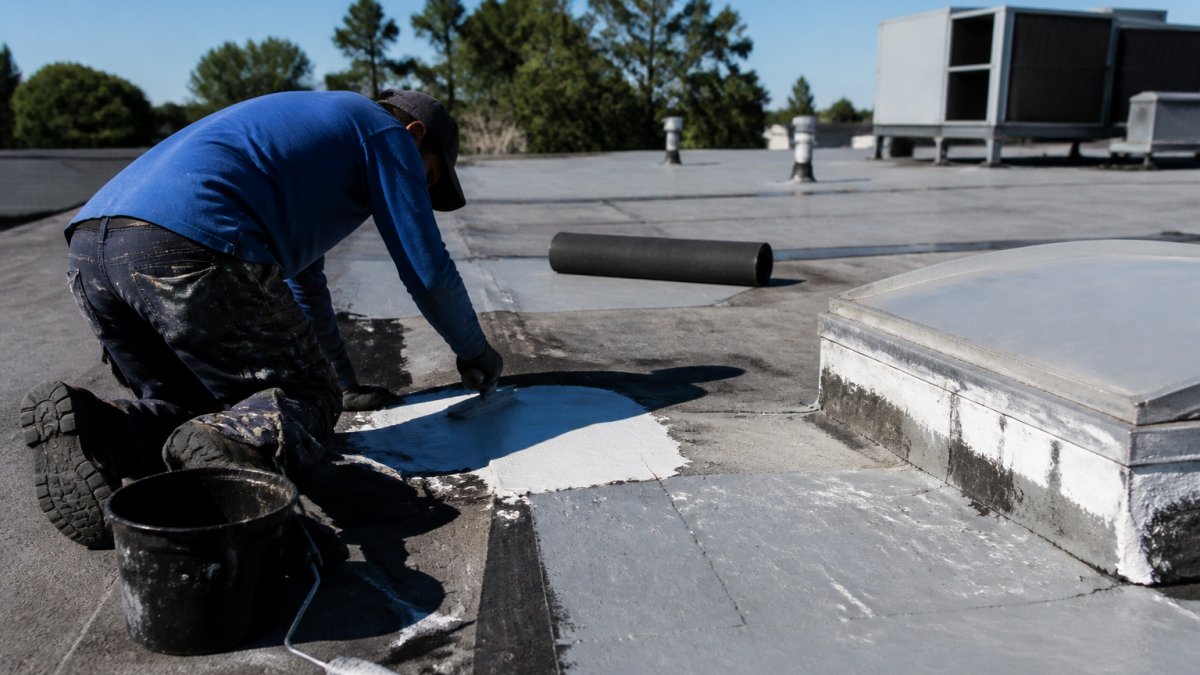
For rubber membranes (EPDM), patches are typically applied using adhesive or mechanical fasteners.
Thermoplastic membranes (TPO, PVC) are heat-welded. Damaged sections are cut out and new membrane is fused to the existing material using heat equipment. This creates a seamless repair that performs similarly to the original membrane.
Modified bitumen roofs can be repaired by cutting out the damaged section and installing a new bitumen sheet. The edges are heated and sealed to bond with the existing membrane.
Flashing repairs often involve removing old caulk, cleaning the joint, and applying new sealant. In some cases, flashing must be replaced entirely if corrosion or separation is severe. Flashing replacement ensures water cannot bypass the repair through gaps or failed sealant.
Addressing Drainage Issues
Ponding water accelerates membrane degradation and increases leak risk. If your roof has areas where water collects, drainage must be improved as part of the repair process.
Adding or clearing drains allows water to exit the roof quickly. If existing drains are clogged or undersized, they can be enlarged or supplemented with additional drains. Some roofs benefit from tapered insulation that creates minimal slope toward drains, improving water flow without requiring structural changes.
In cases where drainage cannot be improved, a roof coating system can be applied to the entire surface. Coatings create a protective barrier that resists water penetration and can extend roof life by several years. This approach works best when structural issues are not present and the membrane is still in reasonable condition.
Request a Free Roofing Estimate →
Commercial Roof Repair vs. Replacement: Making the Right Choice
The decision between repairing and replacing your flat roof depends on damage extent, roof age, and long-term cost analysis. This is where professional guidance becomes invaluable.
Repair is typically the right choice when:
- Damage is localized to small areas (under 10% of roof surface)
- The roof membrane is less than 15 years old
- Underlying structure is sound with no sagging or soft spots
- Total repair cost is less than 30% of replacement cost
Replacement is typically the right choice when:
- Damage is widespread across multiple areas of the roof
- The roof is over 20 years old and showing signs of general deterioration
- Repairs have been needed repeatedly over the past 3-5 years
- The membrane has blistering, cracking, or shrinkage across large sections
- Total repair cost exceeds 50% of replacement cost
Age matters significantly. Most flat roof membranes have a 15-20 year lifespan. If your roof is approaching the end of its expected life, replacement often makes more financial sense than investing in repairs that may only extend life another 2-3 years. You'll eventually need replacement anyway, and deferring it repeatedly costs more than addressing it once.
Consider your building's operational needs. If your business cannot tolerate roof leaks or interruptions, replacement provides peace of mind. If you can manage occasional repairs, extending an aging roof through targeted fixes may be acceptable short-term.
Document all repair history. If you've repaired the same area twice in two years, that's a signal that underlying issues remain and replacement may be necessary. A professional roof inspection can clarify whether problems are isolated or systemic.
Implementing a Commercial Roof Maintenance Plan
Preventive maintenance extends flat roof life, reduces emergency repairs, and protects your building investment. A structured plan catches problems before they become expensive.
Quarterly inspections identify issues early. Walk the roof after major storms, during spring and fall, and before winter.
Drain cleaning should happen twice yearly, spring and fall. Remove leaves, dirt, and debris that block water flow.
Membrane cleaning removes dirt and algae that can trap moisture and accelerate degradation.
Sealant inspection should occur annually. Check caulking around penetrations, flashing, and seams. Reapply sealant where it has cracked or separated.
Tree trimming near the roof reduces leaf and branch debris. Overhanging branches that scrape the roof surface during wind can puncture the membrane.
Professional inspections by a licensed contractor should happen annually or after major weather events. A trained eye catches problems that building staff may miss.
A maintenance plan typically costs 10-15% of what emergency repairs would cost. The investment pays for itself through extended roof life and avoided crisis situations.
Safety, Warranty, and Documentation
Roof work involves fall hazards and exposure to weather. Safety practices protect workers and your building.
Licensed contractors follow established safety protocols. They use fall protection equipment, secure tools and materials, and follow OSHA guidelines for working at height.
Warranties on repair work vary by contractor and repair scope. Patch warranties typically cover 1-3 years. Material warranties may extend 5-10 years depending on the product used.
Documentation is essential for insurance purposes. Maintain records of all inspections, repairs, and maintenance. Photograph damage before repair and after completion.
Keep receipts and invoices from all roof work. These records demonstrate that you've maintained the roof properly, which may help if coverage disputes arise.
Request a detailed invoice that describes the work performed, materials used, and labor hours.
Protecting your commercial building starts with understanding your roof's condition and addressing problems before they escalate.
When you're ready to evaluate your roof's condition, Roofing Done Right offers free roof inspections and detailed assessments.
Frequently Asked Questions
How do you repair a commercial flat roof?
Commercial flat roof repair depends on the damage type and location. Minor leaks are sealed with roofing cement or patches applied to the membrane. For larger areas, sections of the membrane are replaced. Drainage problems are fixed by clearing gutters and downspouts or installing additional drains. A licensed contractor will assess the damage, determine the repair scope, and use materials suited to your roofing system. Most repairs can be completed in one to three days, depending on weather and damage extent.
What should be included in a commercial roof maintenance plan?
A solid commercial roof maintenance plan includes seasonal inspections (twice yearly), clearing debris from drains and gutters, checking for ponding water, inspecting the membrane for cracks or blisters, and documenting all findings. Plan for minor repairs before they become major problems. Schedule inspections after severe weather. Keep detailed records of all maintenance and repairs for warranty and insurance purposes. Regular maintenance extends roof life and prevents costly emergency repairs.
When should a business replace instead of repair a flat roof?
Replace your flat roof when repairs exceed 25-30% of replacement cost, the roof is near the end of its lifespan (typically 15-25 years depending on material), or widespread damage affects multiple areas. If you're facing frequent repairs year after year, replacement is often more cost-effective long-term. A licensed contractor can assess your roof's condition and help you decide whether repair or replacement makes financial sense for your building.
What causes leaks on commercial flat roofs?
Flat roofs leak because water pools on the surface rather than draining off like sloped roofs. Common causes include clogged drains and gutters, poor drainage design, membrane cracks or punctures, deteriorated seams, and missing or damaged flashing around penetrations. Weather exposure, foot traffic, and age all contribute to membrane breakdown. Regular inspections catch small problems before they become leaks. Proper maintenance of drainage systems is critical to preventing water intrusion.